Serbia's folk tales, read aloud — the opening of a new World Classics shelf. These are tales from Serbian Folk-lore, the book in which Madame Elodie L. Mijatovich selected and translated into English the folk tales gathered by Vuk Stefanović Karadžić, the father of Serbian folk-literature scholarship. The book was first published at London in 1874; this reading follows its second edition, of 1899, and the tales stand in the order she printed them.
Disclosure: this performance is narrated by AI-generated voices.
Stories in this episode:
00:00 Introduction — a new shelf opens: Mijatovich's Serbian Folk-lore, Karadžić's collection behind it, and how this shelf chooses what it builds.
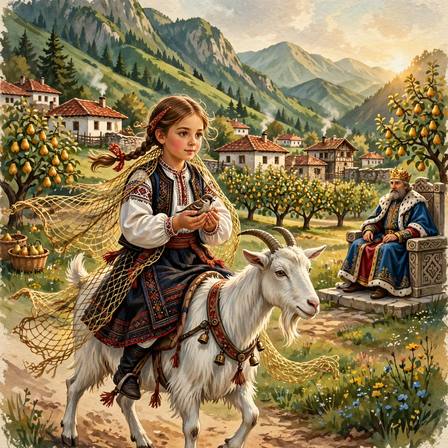
01:58 The Wise Girl — a poor man's daughter teaches her father how to beg and how to speak wisely, then answers the king's impossible errands — come neither on foot nor on horseback, neither naked nor dressed, neither with a present nor without one — by setting impossible errands of her own.
08:51 The Three Suitors — three friends love one princess. One finds a carpet that carries you wherever you wish, one a telescope that shows whatever you wish to see, and one an ointment that cures every disease. When the princess lies dying far away, all three gifts are needed — and the friends will not quarrel over which of them saved her.
19:21 Closing Words
The source. Vuk Stefanović Karadžić (1787–1864) gathered these tales from Serbia's village story-tellers and published his Serbian folk tales at Vienna in 1853. Elodie Lawton Mijatovich (1825–1908) translated the tales into English for Serbian Folk-lore (London, 1874; second edition 1899). The copy read from is Project Gutenberg #45321. Of the book's twenty-six tales, twenty-one are excluded under this shelf's rule against depicted violence and harm, one is benched by adjudication, and two more passed screening but wait for Part 2; the two built here open the shelf. Every excluded tale stands named, with its reason, in the shelf register — nothing is silently dropped, and no completeness is claimed that the exclusions contradict.
Music: the instrumental theme Before the Pines End is heard at the opening and the close, and as a short separator between the two stories. No music plays beneath the narration.
Read by Bruno for KacheliTV World Classics.
