Part Three of Folk Tales of Bolivia gathers the five traditions banked as the Part Two reserve, all from José Manuel Aponte's Tradiciones bolivianas (La Paz, 1909), in a fresh English translation made for this series.
Disclosure: this performance is narrated by AI-generated voices.
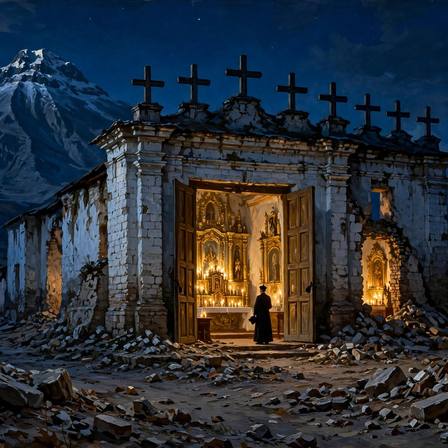
The Midnight Mass of San Benito. On Good Friday night, when the last stroke of midnight dies away, the ruined church of San Benito stands lit and a priest in black vestments comes out of the sacristy alone — a soul in pain, tradition says, waiting for one man to serve his mass and two more to hear it. To this day, no one has come.
Doctor de la Rúa. The comic anecdotes of Potosí's most eccentric lawyer: his formal visits to his own wife, the three blessed candles of the house, and the dictation ritual that turned every brief into a day's labour — down to the famous "punto y coma."
The Hidden Treasures of Potosí. The tapados — the buried silver of the Imperial Town: the two sisters whose crumbling wall opened on a cupboard of treasure; the lost millions of Francisco Gomes de la Rocha; the bottomless lagoon of Tarapaya; and the treasure-hunter who came upon his neighbour's spoons.
The Seven Fridays of San Cristóbal. In the season of the Seven Fridays, the saint who marries off his devotees within the year answers one mother's prayer — "Marry her to the sacristán!" — and the mother comes back a year later to give him back the son-in-law, in verse.
El Paquete. At the finca of Mojotorillo, a headless dandy in evening dress, cigar in hand, walks the room at midnight and empties the house of everyone who dares sleep there — until the day the alcoba comes down.
Each piece is given whole, exactly as Aponte wrote it; nothing has been cut, softened or added. In Doctor de la Rúa, one period detail is kept exactly as written: the wife's formal visits are announced by an elderly Black woman, formerly enslaved by the family, whose lifelong service the tale records in two clauses. The Hidden Treasures of Potosí recounts the exactions of the independence era in general terms, and keeps three brief clauses as written — a reported death-penalty threat, a gallows death, and the tradition of two mummified women found in Rocha's gallery — together with one clause on swimmers lost in the lagoon. In The Seven Fridays of San Cristóbal, the husband the saint provides turns drunkard, and his treatment of his wife and mother-in-law is told in one summary clause; the tale condemns him, and the mother returns him to the saint.
Source: José Manuel Aponte, Tradiciones bolivianas (La Paz, 1909), public domain. Fresh English translation made for KacheliTV.
Narration: KacheliTV standard narrator. Music: instrumental bed, "Istanbul Cello Nocturne."
Chapters:
0:21 The Midnight Mass of San Benito
9:20 Doctor de la Rúa
22:57 The Hidden Treasures of Potosí
43:57 The Seven Fridays of San Cristóbal
57:44 El Paquete
