The Fables of Ivan Krylov — Episode Twenty-Five
Disclosure: this performance is narrated by AI-generated voices.
Five fables by Ivan Krylov (1769–1844), in new English verse translations made for this show, read aloud over a gentle instrumental bed.
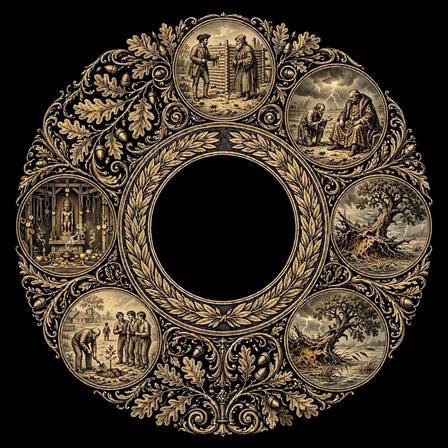
The Nobleman and the Philosopher (Вельможа и Философ, Book II, No. 3) — In an idle hour a Nobleman asks a Sage who reads men's hearts like a book: why is it that whatever we begin — courts, learned societies — the very first ignorant men push in before we have time to look around? Is there no remedy at all? The Sage's answer is a whole philosophy in one picture: a newly finished wooden house, its masters not yet moved in, and the crickets long since settled.
The Rich Man and the Poet (Богач и Поэт, Book VII, No. 19) — A Poet sues a great Rich Man before Zeus himself: he has neither spoon nor corner, all his wealth is in his imagination, while his rival, with no deserts and no mind, swells fat on luxury in halls full of flatterers. Jupiter's judgement is the surprise — one man's fame was chosen as his lot, the other's goods were given only for a lifetime, and grandchildren will not remember the rich man's name.
The Oak and the Reed (Дуб и Трость, Book I, No. 2) — The mighty Oak pities the little Reed: a sparrow is a weight to her, the lightest breeze bends her orphan-like, while he stands firm and straight as the Caucasus, laughing at whirlwinds and storms. The Reed is not troubled — she bends but does not break, and the storms, she warns, may threaten the Oak far more. Krylov ends it with a single northern blast: let us wait the end.
The Old Man and the Three Youths (Старик и трое Молодых, Book III, No. 13) — Three strong young neighbours laugh at an Old Man planting a little tree: he would need two centuries, a second Methuselah, to taste its fruit — such plans belong to the young, and it is time for him to know the grave. His humble answer — that he plants for his grandson, and that no one can guarantee who will outlive whom — is borne out in full: the sea, a life of excess abroad, and a draught of cold water do their work, and the good old man mourns all three.
The Oracle (Оракул, Book I, No. 9) — In a certain shrine a wooden god gives prophetic answers and wise advice, hung with silver and gold, buried in sacrifices and choked with incense, and everyone believes blindly. Then, wonder and disgrace, the Oracle begins to talk nonsense and lie to every comer. The idol is hollow, and priests sit inside it to speak — and Krylov's closing lines aim the discovery straight at a very human institution.
Krylov Fables.
KacheliTV — Russian classics, read aloud.
