Folk Tales of Lesotho — Part 2 (The Bird That Makes Milk · Ntoatsana)
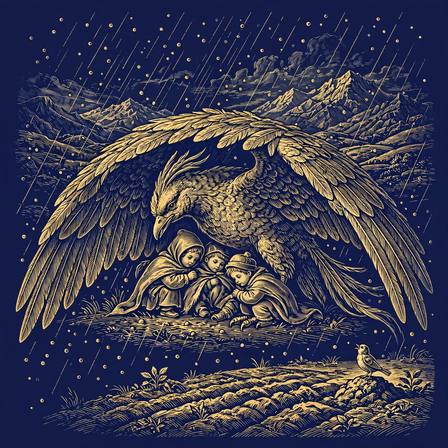
Part two of the Lesotho shelf. Two more folk tales of the Basuto people, from Édouard Jacottet's Contes populaires des Bassoutos (Paris, 1895), collected by Jacottet himself in Basutoland — modern Lesotho — where he lived nearly ten years and spoke the language, and heard here in a fresh in-house English translation made from Jacottet's French. In The Bird That Makes Milk, a little bird undoes Mamasilo's hoeing every evening with its song, until she catches it and its frightened refrain fills every vessel in the village with curdled milk; and when the children who borrowed it lose it on the hillside, the immense bird Tlatlasollé shelters them all under its wings from a tree-breaking hailstorm, raises them in its nest, and in time flies every one of them home to its own parents. In Ntoatsana, a whirlwind carries the herd-girl to the Ma-Tébélé, the fabulous people with one leg, one arm, one eye and one ear; years later she silences the magic horns that guard her hut and escapes by night with her twin daughters, while a marvellous singing, dancing sheep stops her one-legged pursuers in wonder, again and again, until they give up and go home.
Disclosure: this performance is narrated by AI-generated voices.
The Bird That Makes Milk — a field that will not stay hoed, a bird that makes curdled milk, lost children sheltered under great wings, and every child returned home.
Ntoatsana — a whirlwind, the one-legged Ma-Tébélé, magic horns silenced with hot water and stones, and a singing sheep that dances a whole pursuit to a standstill.
The tales:
0:46 The Bird That Makes Milk
16:09 Ntoatsana
From Contes populaires des Bassoutos by Édouard Jacottet (1858–1920), published in Paris in 1895 and in the public domain; lawful copy: Internet Archive (contespopulaires00jaco). Tales X and XX, complete and in book order, in a fresh in-house English translation from the French; Jacottet's scholarly footnotes are apparatus and are not narrated. Eleven of the book's twenty-three tales are excluded from this shelf by name after full readings: Le petit lièvre · Le chacal, la colombe et la panthère · Masilo et Masilonyané · Masilo et Thakané · Tsélané · Mosélantja · Nyopakatala · Modisa-oa-Bipodi · Koumongoé · Monyohé · Mosimodi et Mosimotsané. No claim of completeness for the book is made.
Narrated by Morgana.
Music: Bandoneo Street Romance, heard as the opening and closing theme and briefly between the stories; no music under the narration.
KacheliTV — world classics, read aloud.
